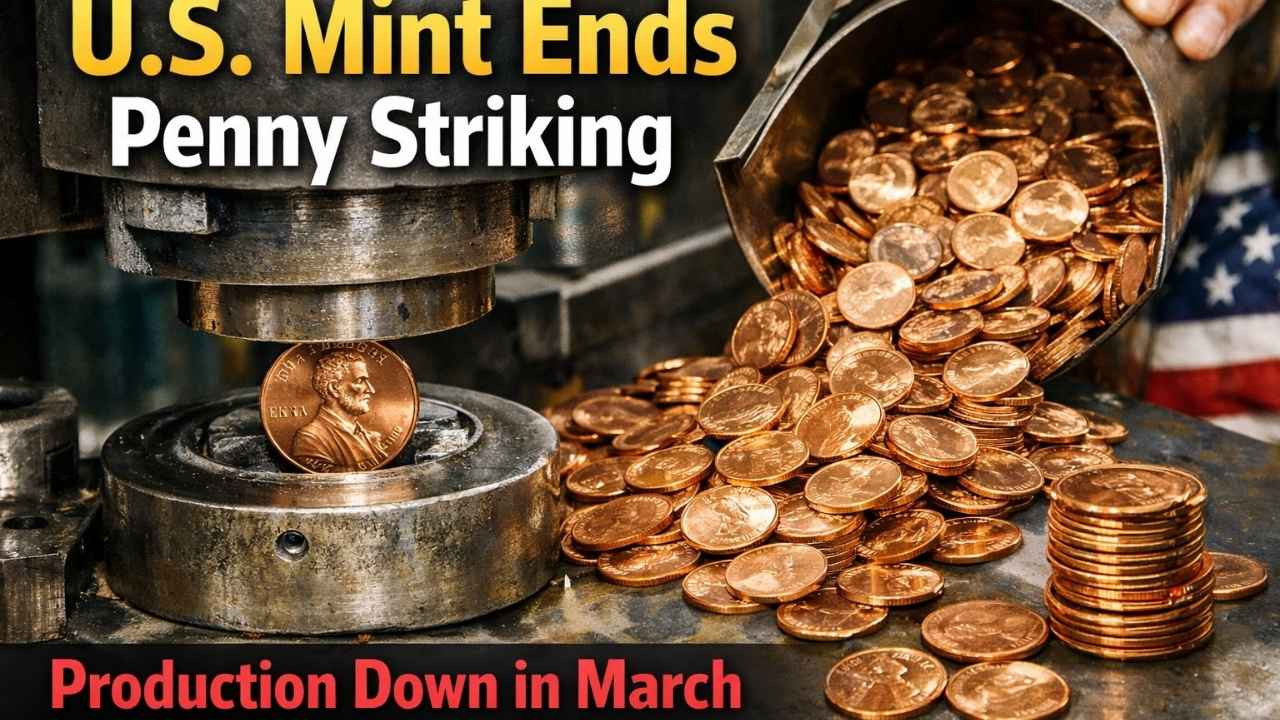
U.S. Mint Ends Penny Striking: The United States Mint has announced a significant change in its coin production strategy. Penny striking has officially ended, marking the close of an era in American currency. This decision has drawn attention from collectors, economists, and the general public. The announcement coincides with a noticeable decline in overall coin production during March, raising questions about the future of U.S. coinage and the role of small denomination coins in modern commerce.
The History of the Penny
The penny has been a fixture of American currency since 1793. Over the centuries, its design has evolved, featuring iconic images such as the wheat ears, the Lincoln Memorial, and the enduring portrait of Abraham Lincoln. For generations, the penny has been a symbol of thrift and everyday transactions. Its discontinuation represents not just a shift in monetary policy but also a cultural milestone.

Reasons Behind Ending Penny Striking
The decision to end penny production stems from economic and practical considerations. The cost of producing a penny has long exceeded its face value, with expenses tied to raw materials, labor, and distribution. Rising metal prices and inflation have made the penny increasingly impractical. By halting production, the Mint aims to reduce costs and streamline operations, focusing resources on coins that remain essential to commerce.
Decline in March Production
March saw a notable decline in overall coin production. This reduction reflects both the end of penny striking and broader adjustments in Mint operations. Seasonal factors, demand fluctuations, and strategic planning all contribute to monthly variations in output. The decline in March underscores the impact of discontinuing the penny and signals a new phase in U.S. coinage.

Impact on Collectors
For collectors, the end of penny striking presents both challenges and opportunities. Pennies minted in recent years may gain added significance as the final issues of their kind. Special editions, proof sets, and uncirculated pennies could see increased demand. Collectors often value coins that mark historical transitions, and the discontinuation of the penny is a moment of numismatic importance.
Economic Implications
The penny’s removal from production raises questions about its role in everyday transactions. While many argue that the coin has outlived its usefulness, others worry about rounding practices and the psychological impact of losing a familiar denomination. Economists point out that eliminating the penny could simplify transactions and reduce costs, but the adjustment may take time for consumers and businesses.

Public Reaction
Public reaction to the end of penny striking has been mixed. Some view it as a practical step toward modernization, while others feel nostalgic about the coin’s disappearance. The penny has long held sentimental value, often associated with childhood savings, charity collections, and cultural expressions like finding a lucky penny. Its absence will be felt in both economic and emotional terms.
The Future of Small Denominations
The end of penny production raises broader questions about the future of small denomination coins. Nickels and dimes also face challenges related to production costs and declining usage. As digital payments become more prevalent, the role of physical coins continues to diminish. The Mint’s decision may be the first step in a larger reevaluation of coinage in the twenty first century.

Collectors’ Strategies
Collectors are already adjusting their strategies in response to the penny’s discontinuation. Many are seeking complete sets of Lincoln cents, focusing on key dates and mint marks. Others are investing in proof and uncirculated editions from the final years of production. The end of penny striking adds urgency to these pursuits, as collectors aim to preserve a piece of history.
Educational Value
The discontinuation of the penny offers educational opportunities. Teachers and historians can use this moment to discuss the evolution of currency, the economics of coin production, and the cultural significance of money. Students can learn about the balance between tradition and practicality in monetary policy, as well as the role of innovation in shaping commerce.

The Mint’s Perspective
From the Mint’s perspective, ending penny production is a matter of efficiency and sustainability. By focusing on coins that remain relevant to commerce, the Mint can allocate resources more effectively. The decline in March production reflects this transition, as the Mint adjusts to new priorities and prepares for future challenges in coinage.
Conclusion
The end of penny striking marks a turning point in American currency. While the penny has been a symbol of thrift and tradition for over two centuries, its production has become economically unsustainable. The decline in March coin output highlights the impact of this decision and signals a new era for the U.S. Mint. For collectors, the penny’s discontinuation offers opportunities to preserve history, while for the public, it represents both practical change and cultural loss. As the Mint moves forward, the future of small denomination coins remains uncertain, but the legacy of the penny will endure in American memory and numismatic collections.