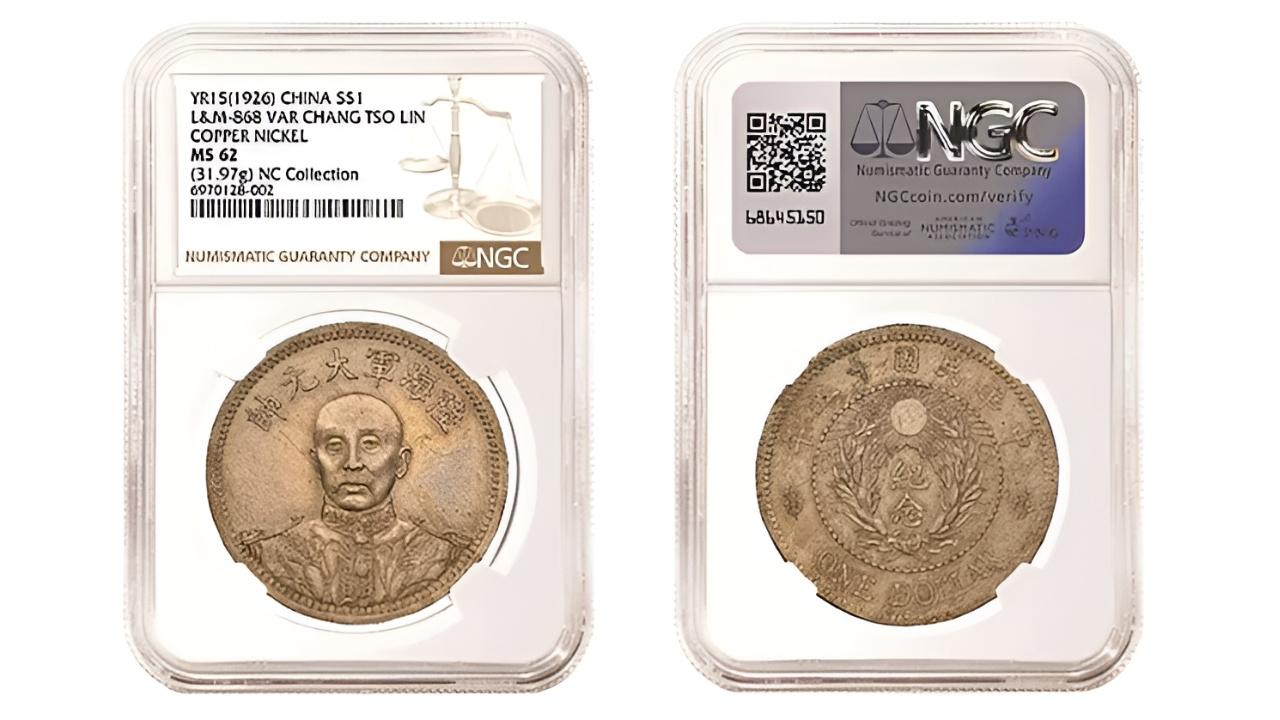
Rare NGC-Certified Chinese Coins: Chinese coinage has long captivated collectors worldwide. From ancient spade money to modern commemorative issues, the country’s monetary history reflects its dynastic changes, cultural shifts, and political upheavals. Among the most intriguing pieces are those minted during the turbulent early twentieth century, when warlords and regional leaders issued their own coinage to assert authority. These coins are not only rare but also carry immense historical significance, making them highly sought after in numismatic circles.
The Role of NGC Certification
The Numismatic Guaranty Company (NGC) plays a vital role in authenticating and grading coins. Certification ensures that collectors and investors can trust the legitimacy of their acquisitions. For Chinese coins, which are often subject to counterfeiting due to their high value, NGC certification provides peace of mind. A coin encapsulated in an NGC holder is backed by expert evaluation, guaranteeing authenticity and condition. This adds both credibility and market value, especially for rare issues like the Chang Tso Lin dollar.
Who Was Chang Tso Lin?
Chang Tso Lin, also known as Zhang Zuolin, was a powerful warlord in Manchuria during the 1920s. He rose to prominence during a period of political fragmentation in China, commanding significant military and economic influence. His ambition to unify northern China under his control led him to issue coinage bearing his image. These coins were not merely monetary instruments but symbols of authority, designed to legitimize his rule. The Chang Tso Lin dollar stands as a tangible reminder of his brief but impactful reign.
The Chang Tso Lin Dollar
The Chang Tso Lin dollar is one of the rarest and most historically significant coins from the warlord era. Struck in silver, it features a portrait of Chang Tso Lin on the obverse, projecting his authority in a manner similar to monarchs and emperors of earlier times. The reverse typically carries inscriptions and national emblems, reinforcing its official status. Because these coins were produced in limited quantities and circulated in a volatile political environment, surviving specimens are exceedingly scarce. When certified by NGC, they become prized treasures in any collection.

Historical Context of Warlord Coinage
The early twentieth century was a time of chaos in China. Following the fall of the Qing dynasty in 1911, the nation fragmented into regions controlled by warlords. Each leader sought to establish legitimacy, often through coinage. Coins bearing their likenesses or regional symbols were issued to demonstrate sovereignty. While many of these coins were short-lived, they provide invaluable insight into the political landscape of the era. The Chang Tso Lin dollar epitomizes this phenomenon, representing both ambition and instability.
Rarity and Market Value
Rarity is the cornerstone of numismatic value. The Chang Tso Lin dollar is rare not only because of its limited mintage but also due to the historical circumstances that curtailed its circulation. Many coins were melted down or lost during subsequent conflicts, leaving only a handful of survivors. When such coins appear at auction, they attract intense bidding from collectors worldwide. NGC certification amplifies their desirability, as buyers can be confident in the coin’s authenticity and grade. Prices often soar into the tens of thousands, reflecting both scarcity and demand.

Collector Appeal
Collectors are drawn to the Chang Tso Lin dollar for multiple reasons. Its rarity ensures exclusivity, while its historical significance adds depth to any collection. Owning such a coin is akin to holding a piece of China’s turbulent past. For those interested in the warlord era, it represents a pinnacle acquisition. Even beyond specialized collectors, the coin appeals to investors seeking tangible assets with proven appreciation. The combination of history, artistry, and scarcity makes it a standout in the world of numismatics.
The Importance of Preservation
Preservation is critical for coins of this caliber. Environmental factors such as humidity, temperature, and handling can degrade silver coins over time. NGC encapsulation provides protection against these risks, ensuring that the coin remains in its certified condition. Proper storage and care are essential for maintaining both value and historical integrity. Collectors who invest in rare Chinese coins often take meticulous steps to safeguard their treasures, recognizing that preservation is as important as acquisition.
Auction Highlights
When rare NGC-certified Chinese coins, including the Chang Tso Lin dollar, appear at auction, they generate considerable excitement. Auction houses highlight these pieces as headline lots, drawing attention from international bidders. The competitive atmosphere underscores the global demand for such coins. Records are frequently broken, with prices reflecting the intersection of rarity, certification, and historical significance. Each sale reinforces the coin’s status as a numismatic icon.
Legacy of the Chang Tso Lin Dollar
The legacy of the Chang Tso Lin dollar extends beyond numismatics. It serves as a historical artifact, encapsulating the ambitions of a warlord who sought to shape China’s destiny. While Chang Tso Lin’s reign was ultimately cut short, his coinage endures as a testament to his influence. For collectors, owning this coin is not merely about possession but about connecting with a pivotal chapter in Chinese history. Its enduring allure lies in its ability to bridge the past and present, offering a tangible link to a complex era.

Conclusion
Rare NGC-certified Chinese coins, headlined by the Chang Tso Lin dollar, represent the pinnacle of numismatic collecting. They embody history, rarity, and artistry, appealing to both seasoned collectors and investors. The Chang Tso Lin dollar, in particular, stands as a symbol of ambition and authority during one of China’s most turbulent periods. With NGC certification ensuring authenticity and preservation, these coins continue to captivate the numismatic world. Their legacy is not only monetary but historical, reminding us of the enduring power of coinage as a reflection of human ambition and cultural identity.