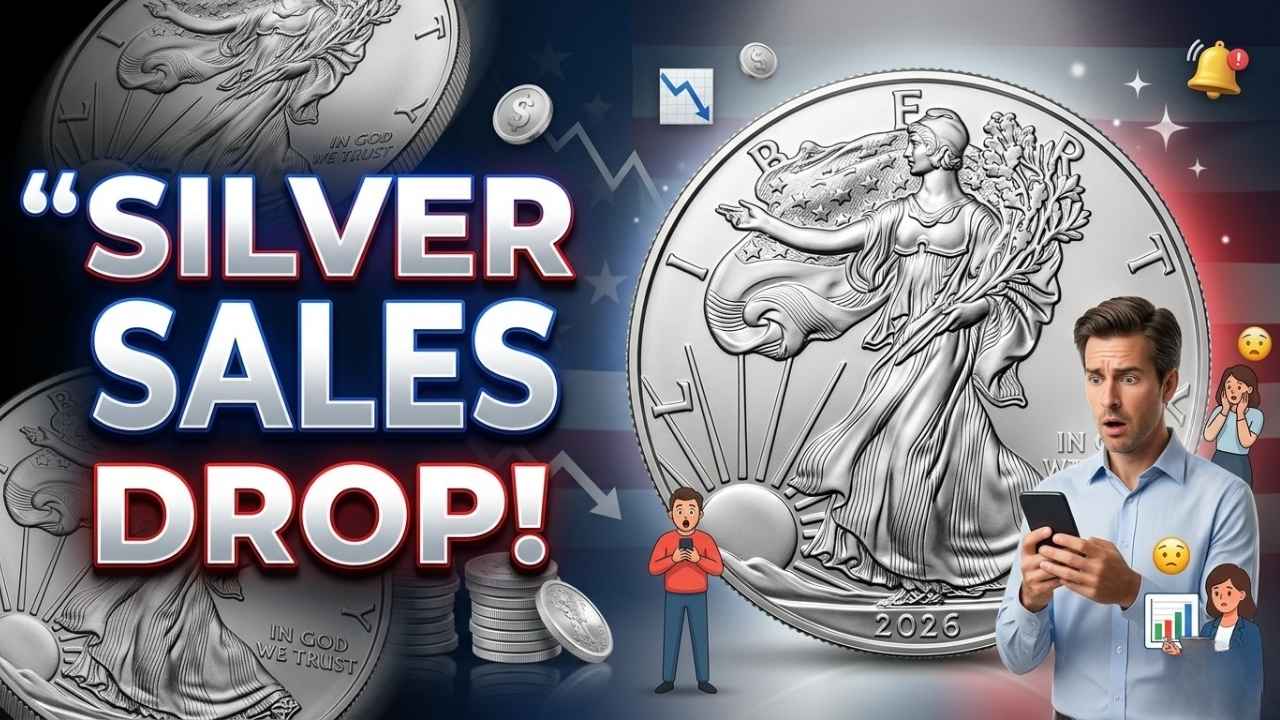
Silver Sales Retreat at U.S. Mint: The U.S. Mint, a key institution in the production of American coins and precious metal products, has recently witnessed a noticeable dip in silver sales after an extraordinary surge just the week before. This surprising turn of events has ignited discussions within the precious metals industry, as many experts anticipated that the demand for silver would continue rising. In this article, we explore the reasons behind this decline, the factors affecting the silver market, and what it means for investors and collectors.
The Surge in Silver Sales: A Week of Unprecedented Demand
The prior week saw a dramatic spike in silver sales, with the U.S. Mint experiencing one of the busiest times in recent memory, particularly for its American Silver Eagle coins. This surge in demand was driven by multiple factors, including global economic instability, fears of inflation, and growing interest in tangible assets like silver. Investors rushed to purchase silver as a safe haven in response to concerns about the stock market’s volatility and rising inflationary pressures.
In addition to traditional investors, there was also a noticeable influx of new buyers. Many individuals, who had never before considered silver as an investment, were drawn to its potential as a hedge against the depreciating value of fiat currencies. As the demand soared, the U.S. Mint had to accelerate its production efforts to keep up with the large volume of orders.
The Retreat: What Led to the Decline?
Despite the explosive growth in sales, silver sales at the U.S. Mint have recently begun to retreat. This unexpected decline has left industry analysts and investors wondering about the underlying causes. Two key factors appear to be driving this decrease.

Firstly, the initial surge in silver purchases might have been driven by a sense of urgency. As silver prices began to rise, investors felt compelled to buy quickly to capitalize on potential future gains. However, once many individuals had made their purchases, demand likely slowed. Investors who had initially flocked to silver may no longer feel the same sense of urgency, as they now hold substantial amounts of the precious metal.
Secondly, a stabilization in global economic conditions may have contributed to the drop in silver sales. After a period of uncertainty, the financial markets appear to have calmed somewhat. Central banks have signaled their intentions to tighten monetary policy in response to inflation, which may have reduced the anxiety that originally drove investors toward silver. As market conditions improve, the demand for silver as a safe-haven asset may have diminished.
Market Trends and Their Impact on Silver Sales
The recent retreat in silver sales at the U.S. Mint is part of a broader pattern in the silver market. Silver is known for its price volatility, which is influenced by factors such as economic conditions, currency fluctuations, and industrial demand. The sudden rise and subsequent fall in sales may simply reflect the market’s natural ebb and flow.
Unlike gold, silver has significant industrial uses in fields like electronics, solar energy, and medical technology. As a result, the price and demand for silver are not solely driven by investor sentiment but also by the health of the global economy. During periods of uncertainty, investors often turn to silver as a store of value, which can cause prices and sales to spike. However, when economic conditions stabilize, demand for silver as a hedge may subside.

The Role of Inflation and Economic Uncertainty
Inflation has played a crucial role in the surge of silver sales in recent years. As the cost of living rises and the purchasing power of fiat currencies declines, many investors view silver as an effective way to protect their wealth. The sharp increase in silver sales at the U.S. Mint is likely a reflection of these broader macroeconomic trends.
However, the recent retreat in sales might suggest that inflation fears are beginning to ease. Central banks worldwide are actively working to control inflation through tighter monetary policies, and this has likely affected investor sentiment. As inflation fears diminish, silver may lose some of its appeal as a hedge against rising prices. This shift could explain why demand for silver has slowed in the wake of the prior surge.

What This Means for Investors and Collectors
For investors, the drop in sales at the U.S. Mint indicates that the silver market might be experiencing a period of cooling after a particularly active spell. Although silver remains an attractive option for diversification and wealth preservation, its short-term prospects are heavily tied to broader economic conditions. While silver still holds long-term value, its immediate appeal as a safe-haven asset might be waning as market conditions stabilize.
For collectors, the slowdown in silver sales could represent an opportunity. With less competition from investors, collectors might find it easier to acquire silver coins and proof sets without the pressure of inflated prices. The U.S. Mint offers a range of silver products, from limited-edition coins to commemorative proof sets, which are highly sought after by collectors. This pause in sales may allow them to add to their collections without competing against the investor-driven market surge.
The U.S. Mint’s Response to the Changing Market
The U.S. Mint has a long history of adapting to shifts in market demand. Whether it is responding to a surge in interest or scaling back production during a decline in sales, the Mint has always managed to remain flexible and efficient. During the period of explosive silver sales, the Mint’s production teams were likely working at full capacity to meet the heightened demand.
As silver sales taper off, the Mint will likely adjust its production levels accordingly. By scaling back production, the Mint can avoid creating an oversupply of silver products, which could lead to price drops. The U.S. Mint’s ability to manage production levels ensures that it can continue to meet demand without flooding the market with excess inventory.
Conclusion
The recent retreat in silver sales at the U.S. Mint following a period of explosive growth underscores the volatility and unpredictability of the silver market. While the surge in silver sales can be attributed to factors like economic uncertainty and inflation concerns, the subsequent decline highlights the market’s sensitivity to shifts in economic conditions.
For investors and collectors, this retreat may represent a time of recalibration. While silver continues to be a valuable asset, both as an investment and a collector’s item, the current market environment calls for careful consideration of broader economic trends. The U.S. Mint, for its part, will continue to adapt to these market shifts, ensuring that its silver products remain an integral part of the precious metals landscape for years to come.