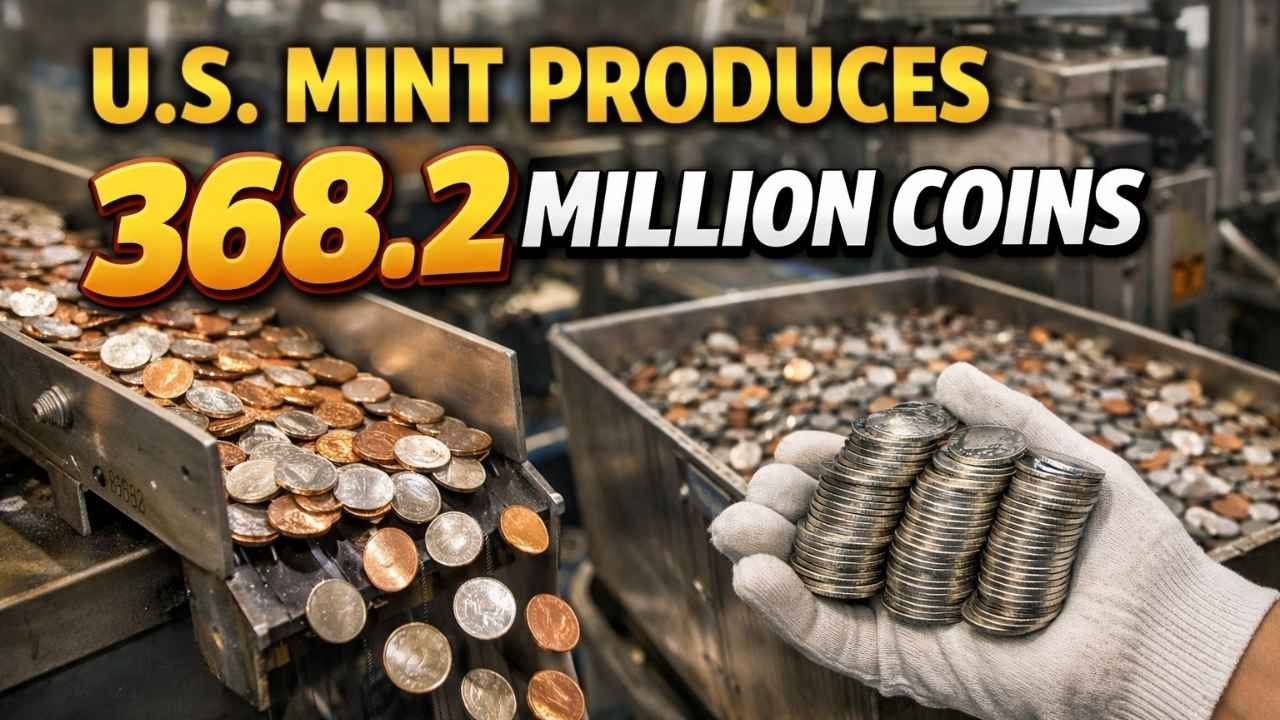
U.S. Mint Produces 368.2 Million: The United States Mint has recently announced that it produced a total of 368.2 million coins for circulation in April. This figure reflects the ongoing efforts of the Mint to supply the nation with sufficient coinage to meet everyday transactional needs. Coin production is a complex and carefully monitored process, balancing the demand for different denominations while maintaining cost efficiency and quality.
Understanding Coin Production
Coin production is more than just stamping metal into recognizable shapes. It involves careful planning, resource allocation, and strict quality control measures. The United States Mint operates several facilities across the country, each specializing in specific tasks. These facilities are responsible not only for producing coins for circulation but also for creating collectible coins and commemorative issues that appeal to collectors and investors.

The number of coins produced each month can vary significantly. Factors influencing production include economic activity, the demand from banks and businesses, and the amount of coins already in circulation. April’s total of 368.2 million coins indicates a stable demand, reflecting ongoing economic activity as people continue to rely on physical currency for daily transactions.
Distribution of Denominations
The United States Mint produces coins in various denominations, including pennies, nickels, dimes, quarters, half dollars, and dollar coins. Each denomination has unique characteristics and serves a different role in commerce. For instance, pennies and nickels are often used for small transactions, while quarters and dollar coins are more commonly used in vending machines and public transportation systems.

In April, a significant portion of the 368.2 million coins produced consisted of quarters and pennies, which remain the most frequently circulated coins. Quarters, in particular, are widely used in consumer transactions, from parking meters to laundry machines. The production of these coins ensures that businesses and consumers have access to the denominations they need most.
Economic Implications
Coin production may seem like a simple operational task, but it carries broader economic implications. Adequate coin supply supports everyday commerce by ensuring that consumers and businesses can make transactions efficiently. Shortages of specific denominations can lead to inconveniences, such as the need to round prices or rely more heavily on electronic payments.

Moreover, the production numbers can serve as a subtle indicator of economic activity. Higher coin production often correlates with increased consumer spending and business transactions. Conversely, a decline in production might suggest reduced cash circulation or a shift toward digital payments. April’s production of 368.2 million coins suggests steady economic activity and a continued reliance on physical currency alongside electronic alternatives.
Technological Advances in Minting
The United States Mint has continuously embraced technological advancements to improve coin production. Modern minting techniques incorporate precision machinery, computer-controlled processes, and rigorous quality checks to ensure that each coin meets strict standards. Innovations in metal composition, die design, and stamping efficiency have allowed the Mint to produce millions of coins quickly without compromising quality.

One of the challenges in minting is maintaining consistency across millions of coins. Variations in metal composition, stamping pressure, or die alignment can lead to defects. Technological advancements help minimize these risks, ensuring that coins remain uniform and durable for extended circulation.
The Role of Coin Collectors
While most coins are intended for everyday use, a portion of the United States Mint’s production caters to collectors. Collectible coins, often minted in limited quantities, carry unique designs and sometimes special finishes. Although not part of the 368.2 million coins produced for circulation, these collectible coins highlight the Mint’s dual role in both commerce and numismatics.

Collectors play an important role in preserving coins as part of the nation’s cultural and historical heritage. Special series, commemorative coins, and unique designs attract enthusiasts who value both the artistry and historical significance of the coins. The Mint balances these efforts alongside mass production to ensure that all needs are met efficiently.
Environmental Considerations
Modern coin production also takes environmental considerations into account. The United States Mint has implemented measures to reduce energy consumption, recycle metal scraps, and minimize the environmental impact of operations. These practices are particularly important given the large scale of production, which involves melting, alloying, stamping, and packaging millions of coins.

Sustainable production practices not only benefit the environment but also contribute to the Mint’s efficiency. By recycling metals and optimizing production processes, the Mint can lower costs and reduce waste. These initiatives demonstrate a commitment to responsible manufacturing alongside the primary goal of supplying coins for circulation.
Challenges in Coin Circulation
Even with robust production numbers, the United States faces ongoing challenges related to coin circulation. Coins can be lost, hoarded, or damaged over time, requiring the Mint to adjust production to maintain supply. Seasonal variations, economic shifts, and changes in payment habits can all impact the demand for coins.

Banks and businesses play a crucial role in the distribution of coins. Depositories collect coins from circulation, and the Federal Reserve manages the flow of currency to ensure availability across regions. The collaboration between the Mint, financial institutions, and the public ensures that coins remain accessible where they are needed most.
Conclusion
April’s production of 368.2 million coins by the United States Mint reflects a careful balance of supply, demand, and operational efficiency. Coin production is not just about manufacturing metal discs; it is a complex process with economic, technological, and environmental dimensions. By producing sufficient coins to meet daily transactional needs, the Mint supports the smooth functioning of commerce while also catering to collectors and embracing sustainable practices.

The numbers also provide a glimpse into broader trends in currency usage and economic activity. As society increasingly shifts toward digital payments, the continued production of coins underscores the enduring relevance of physical currency. Coins remain a vital part of everyday life, ensuring that transactions can proceed smoothly, businesses can operate efficiently, and cultural heritage can be preserved. The United States Mint’s ongoing commitment to quality, innovation, and responsibility ensures that the nation’s coinage remains a reliable and enduring component of the financial system.