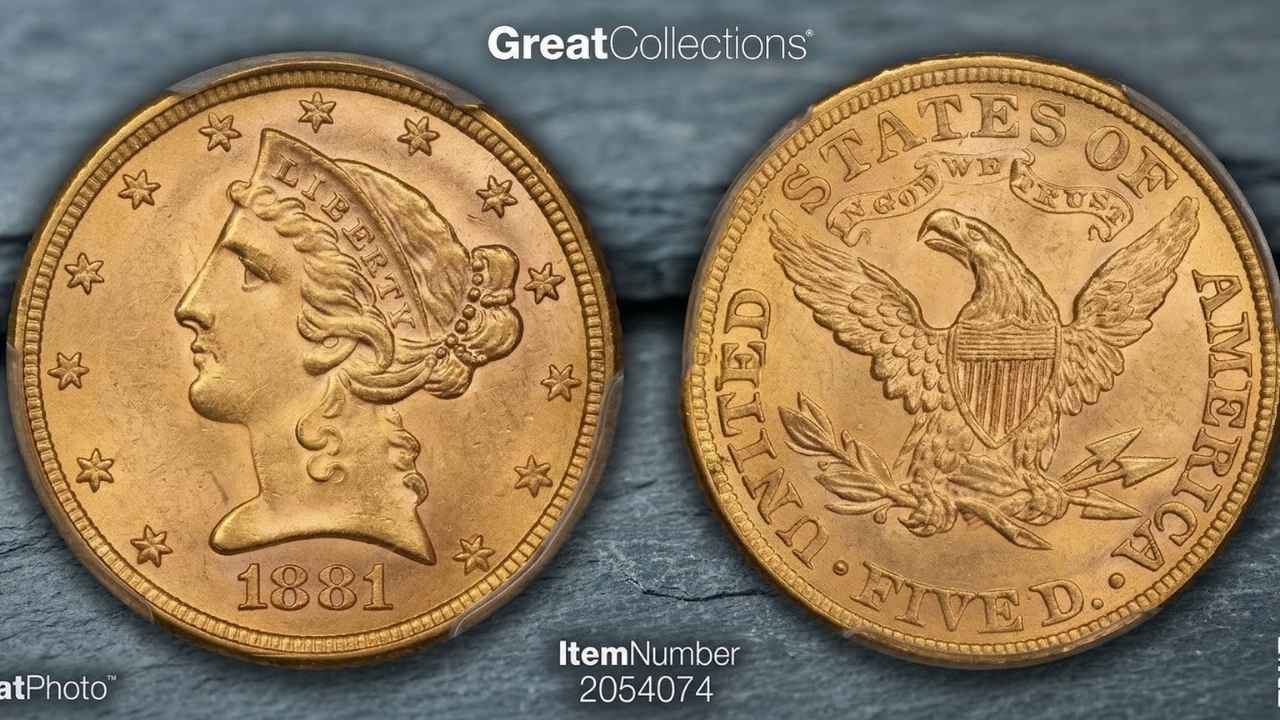
Centennial Collection of Colorado Coins: The Centennial Collection of Colorado Coins and Bank Notes, auctioned by GreatCollections in June 2025, was a landmark event in American numismatics. This extraordinary sale brought together rare territorial gold coins and scarce national bank notes from Colorado, offering collectors and historians a unique glimpse into the financial heritage of the American West. The auction was not merely a commercial transaction but a celebration of Colorado’s monetary history, spanning the gold rush era and the early days of banking in the state.
The Collector’s Vision
The Centennial Collection was assembled over more than two decades by a passionate collector who focused on Colorado’s territorial coinage and national bank notes. His vision was to preserve the financial artifacts of Colorado’s formative years, when mining towns flourished and banks issued notes to support local economies. By carefully curating coins struck by Clark, Gruber & Co. and notes from small-town banks, the collector created a narrative of Colorado’s economic development that resonated deeply with numismatists.

Auction Structure and Participation
GreatCollections presented the Centennial Collection over four Sundays in June 2025. The auction attracted thousands of bids from collectors worldwide, underscoring the global interest in Colorado’s monetary history. With 12 PCGS-certified coins, 7 NGC-certified coins, and 71 PMG-certified bank notes, the sale was a showcase of rarity and quality. More than 3,400 registered bidders participated, placing over 4,500 bids, a testament to the excitement surrounding this offering.
Territorial Gold Coins of Colorado
One of the most celebrated aspects of the Centennial Collection was its territorial gold coinage. Colorado’s territorial coins, struck by Clark, Gruber & Co. in Denver during 1860 and 1861, are among the most fascinating chapters in American numismatics. These coins were minted to serve the booming mining economy before Colorado achieved statehood. Their rarity today reflects both limited production and the turbulent economic conditions of the era.

The highlight was the 1860 $5 Clark, Gruber & Co. gold coin graded PCGS MS-65 with CAC approval. This coin, considered one of the finest known examples, sold for over $300,000. Another standout was the 1860 $10 Clark, Gruber & Co. Mountain Issue graded PCGS MS-62 with CAC approval, notable for its superb red toning and original luster. These coins symbolized the entrepreneurial spirit of Colorado’s early settlers, who sought to create a stable currency in a frontier environment.
National Bank Notes of Colorado
Equally compelling were the national bank notes included in the Centennial Collection. These notes were issued by banks in Colorado towns, many of which were small mining communities that no longer exist. Each note carried the name of its issuing bank, making it a tangible artifact of local history. Collectors prize these notes not only for their rarity but also for the stories they tell about Colorado’s development.

Among the highlights was a note from the Creede National Bank, an exceedingly rare piece that captured the unique banking history of a town born during the silver boom. Other notes represented banks from towns such as Leadville, Durango, and Trinidad, each reflecting the economic lifeblood of frontier communities. Together, these notes painted a vivid picture of Colorado’s financial landscape in the late nineteenth and early twentieth centuries.
Market Impact and Collector Interest
The Centennial Collection auction had a significant impact on the numismatic market. Prices realized in this sale set benchmarks for future auctions of territorial gold and rare bank notes. Collectors and historians alike viewed the event as a landmark, reinforcing the importance of Colorado’s monetary artifacts in the broader narrative of American coinage and banking.

The strong demand demonstrated by thousands of bids highlighted the enduring fascination with frontier finance. For many collectors, owning a piece of the Centennial Collection meant holding a tangible link to the pioneering spirit of the American West. The sale also underscored the role of GreatCollections as a premier auction house capable of presenting historically significant collections to a global audience.
Historical Context of Colorado’s Monetary Heritage
To fully appreciate the Centennial Collection, one must understand the historical context of Colorado’s monetary heritage. During the gold rush of the late 1850s, miners flocked to Colorado in search of fortune. The lack of a stable currency posed challenges, leading to the establishment of private mints such as Clark, Gruber & Co. These coins provided a reliable medium of exchange in a rapidly growing economy.

Later, as Colorado developed, national bank notes issued by local banks became essential for commerce. These notes reflected the trust placed in local institutions and the interconnectedness of small-town economies. Together, territorial coins and national bank notes tell the story of Colorado’s transition from a frontier territory to a thriving state.
Legacy of the Centennial Collection
The Centennial Collection auction was more than a sale; it was a preservation of history. By bringing together coins and notes tied to Colorado’s gold rush and banking heritage, GreatCollections highlighted the enduring fascination with frontier finance. For collectors, owning a piece of this collection meant holding a tangible link to the pioneering spirit of the American West.

The legacy of the Centennial Collection lies in its ability to inspire future generations of collectors and historians. It demonstrated the importance of preserving monetary artifacts as a means of understanding the past. The auction also reinforced the role of numismatics as a discipline that bridges history, economics, and art.
Conclusion
The Centennial Collection of Colorado Coins and Bank Notes auctioned by GreatCollections was a landmark event in the world of numismatics. It celebrated Colorado’s monetary heritage, showcased rare territorial gold coins and national bank notes, and set new benchmarks in the market. More importantly, it preserved the stories of Colorado’s pioneers, miners, and bankers, ensuring that their legacy continues to inspire. For collectors and historians alike, the Centennial Collection was not just an auction but a journey into the heart of America’s frontier spirit.