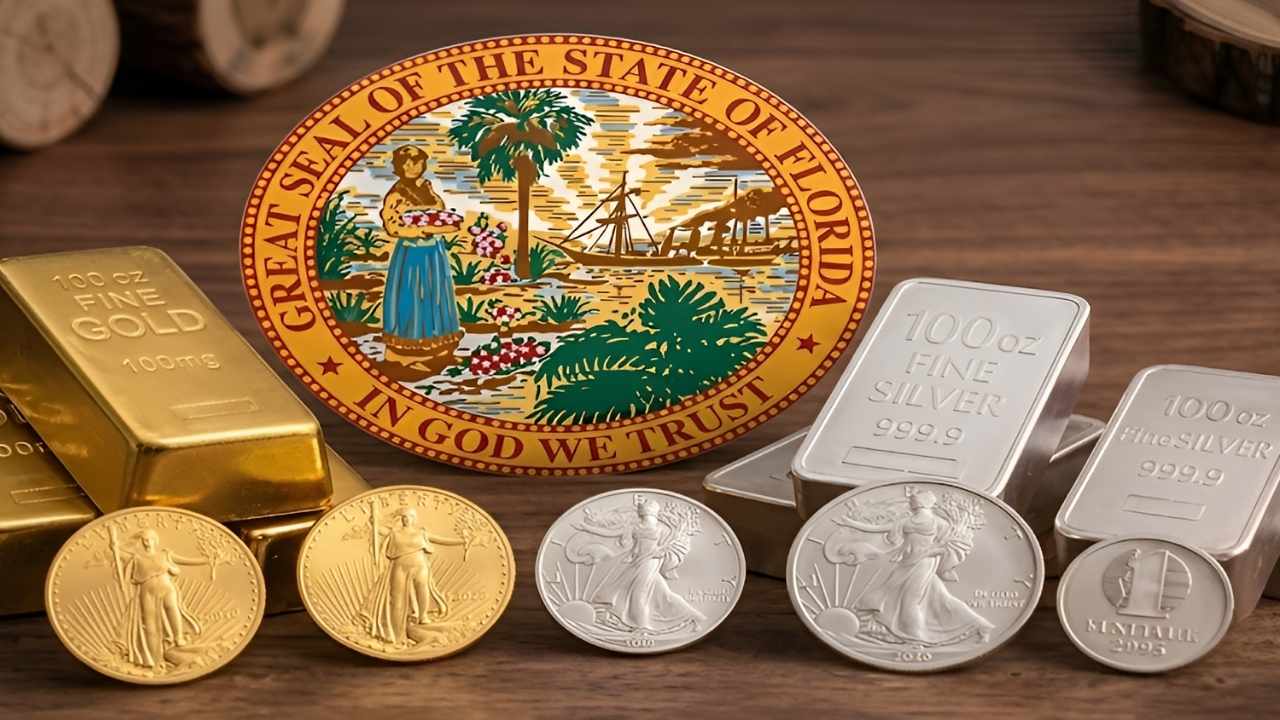
Florida Expands Bullion and Coin Tax Exemption: Florida has taken a significant step in strengthening its position as one of the most bullion‑friendly states in the nation. Beginning August 1, 2025, the state removed the $500 minimum purchase requirement for its bullion and coin sales tax exemption. This means that all qualifying purchases of gold, silver, platinum bullion, and legal‑tender coins are now exempt from sales tax, regardless of transaction size. The change has been welcomed by collectors, small investors, and dealers who see it as a way to make precious metals more accessible to everyone.
Background of the Exemption
Previously, Florida’s exemption applied only to purchases of $500 or more. This threshold created a barrier for small buyers who wanted to purchase fractional gold bars, single silver rounds, or individual coins. While large investors benefited from tax‑free transactions, smaller buyers were left paying sales tax on modest purchases. The removal of the minimum threshold eliminates this imbalance, allowing all buyers to enjoy the same benefits.

What the New Law Covers
The expanded exemption applies to a wide range of qualifying items:
- Gold, silver, and platinum bullion in any form, including bars, rounds, and ingots.
- U.S. legal‑tender coins and currency.
- Foreign legal‑tender coins that meet the definition of bullion.
This means that whether someone buys a single silver coin or a large gold bar, the transaction is exempt from sales tax.

Impact on Collectors
For coin collectors, the change is particularly meaningful. Many collectors purchase coins one at a time, often focusing on rare or historically significant pieces. Under the old law, these smaller purchases were subject to sales tax. Now, collectors can acquire coins without worrying about additional costs, making the hobby more affordable and encouraging broader participation.
Impact on Small Investors
Small investors also benefit from the removal of the $500 minimum. Precious metals are often seen as a hedge against inflation and economic uncertainty. With the exemption now applying to all purchases, new investors can begin stacking metals gradually, buying one ounce at a time without incurring tax penalties. This democratizes access to bullion investment, allowing everyday Floridians to participate in the market.

Benefits for Dealers
Dealers stand to gain from simplified transactions. Under the old law, they had to track purchase amounts carefully to determine whether the exemption applied. This created administrative burdens and sometimes confusion for customers. With the threshold removed, all qualifying purchases are tax‑free, streamlining operations and improving customer satisfaction.
Florida’s Position Among States
Florida’s move places it among a growing list of states that have embraced precious metals as tax‑free investments. In addition to removing the $500 minimum, Florida has also recognized gold and silver as legal tender, effective July 1, 2026. This positions the state as a leader in bullion policy, offering both tax advantages and legal recognition of precious metals as money.

Broader Economic Significance
The exemption reflects broader economic trends. Precious metals are increasingly viewed as a safeguard against inflation and currency devaluation. By removing barriers to entry, Florida encourages wider participation in the bullion market, strengthening both local dealers and the state’s reputation as a hub for precious metals. The policy also aligns with growing interest in constitutional money principles, which emphasize the role of gold and silver as sound money.
Cultural Impact
Beyond economics, the exemption has cultural significance. Numismatics is both a hobby and a way of preserving history. By making coins and bullion more accessible, Florida supports the growth of numismatic culture. Collectors and investors alike can now engage with precious metals more freely, fostering appreciation for both artistry and historical value.

Market Value and Collectibility
While bullion and coins are sold at face value or slightly above, their market value often rises over time. Collectors anticipate strong demand for limited editions and proof sets, particularly now that purchases are tax‑free at any level. The combination of cultural significance and artistic quality ensures that these items will remain valuable additions to collections.
Conclusion
Florida’s decision to remove the $500 minimum for bullion and coin tax exemptions marks a significant milestone in precious metals policy. Collectors, small investors, and dealers now enjoy tax‑free transactions at any purchase level, while the state positions itself as a leader in bullion‑friendly legislation. For Floridians, the change means greater access to precious metals, stronger local markets, and a renewed appreciation for the role of gold and silver in both culture and economy.